2026第十四届生物与生命科学国际会议(ICBLS2026)演讲嘉宾信息如下:
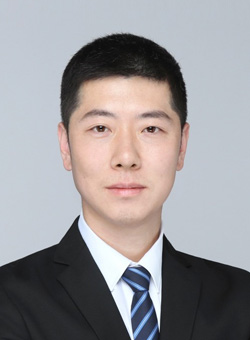
Dr. Zhiwei Qin, Professor
Centre for Biological Science and Technology, Beijing Normal University, Zhuhai, China
Biography
Dr. Zhiwei Qin is a Professor in the Centre for Biological Science and Technology at Beijing Normal University, China. He received his Ph.D. from the University of Aberdeen in 2013 under the supervision of Hai Deng. He subsequently joined the prestigious John Innes Centre as a postdoctoral researcher, where he worked with Barrie Wilkinson until 2019. Following a year in industry at the Demuris Ltd., a biotechnology spin-out associated with the Newcastle University, he established his independent research group at Beijing Normal University in 2020, where he is currently a Professor. His research focuses on microbial natural products, including their discovery, structural elucidation, biosynthesis, and biological functions. In recent years, his interests have expanded to artificial intelligence (AI) for natural product research, particularly the application of protein language models derived from large language model technologies. His recent work includes the AI-guided engineering of antimicrobial peptides, explainable prediction of substrate specificity of nonribosomal peptide synthetase, and protein language model-based analysis of the co-evolution of aromatic polyketide synthases (KSa and KSb). His long-term goal is to integrate AI with natural product science to accelerate the discovery, understanding, and engineering of bioactive microbial metabolites.
Topic
Learning Natural Products from Nature’s Way
Abstract
Microbial nonribosomal peptides (NRPs) exhibit remarkable structural diversity and represent an important source of lead compounds for clinical drug development. Their biosynthesis is catalyzed by nonribosomal peptide synthetases (NRPSs), in which adenylation (A) domains determine the core peptide structure by selectively recognizing and activating amino acid substrates. Accurate prediction of A-domain substrate specificity is therefore essential for understanding both the structural diversity and biosynthetic logic of NRPs. In this talk, we present DeepAden, a two-stage deep learning framework for predicting NRPS substrate specificity. In the first stage, a graph attention network (GAT)-based model identifies 27-residue substrate-binding pockets located within 6 Å of the bound substrate and generates informative pocket representations. In the second stage, these pocket representations are encoded together with substrate information using pretrained protein language models and aligned through contrastive learning. To address the challenge of class imbalance, particularly for nonproteinogenic substrates, we further developed a SHapley Additive exPlanations (SHAP)-guided data augmentation strategy. DeepAden achieves competitive performance compared with existing state-of-the-art methods on benchmark datasets and has been successfully applied to annotate two Streptomyces NRPS biosynthetic gene clusters by providing reliable A-domain substrate specificity predictions. By combining explainable artificial intelligence with protein language models, DeepAden provides a practical framework for substrate prediction and may accelerate the discovery and characterization of new nonribosomal peptide natural products.
距截稿日期还有
天
时
分
秒

全文截稿日期
延期至2026年11月10日
摘要截稿日期
延期至2026年11月10日
会议日期
2026年12月12-14日

huiyi123是一个专业提供国际学术会议交流、学术论文出版的平台。会议接受中文和英文文章,提供30-60天快速在线出版。会议在上海,青岛,杭州,南京,成都,西安,武汉,苏州,济南等城市举办。
联系我们
邮箱:contact@conference123.net
手机:0086-18616502321
0086-18621626037
微信:18616502321
地址:上海市普陀区岚皋路567号品尊国际中心B座11楼

添加组委会微信
(王老师)

添加组委会微信
(周老师)
 请登录
请登录


